

The Rental Edit: How to Make a Rented Flat Feel Like Yours
Rugs, curtains, lighting, handles, plants and everything else you can do to a rental flat without drilling a hole or losing your deposit — a complete guide.
Most renters stop trying. The landlord painted the walls magnolia, laid the cheapest laminate available, chose furniture that can survive a thousand tenants, and left. The result is a flat that functions — you sleep in it, cook in it, invite people over to it — but never quite feels like yours. The mistake is assuming that painting and drilling are the only ways to make a space feel personal. Everything in this guide is reversible, deposit-safe, and available without a contractor. It is also, in aggregate, enough to make a rented flat feel entirely different.
The Rug: Highest Impact, No Permission Required
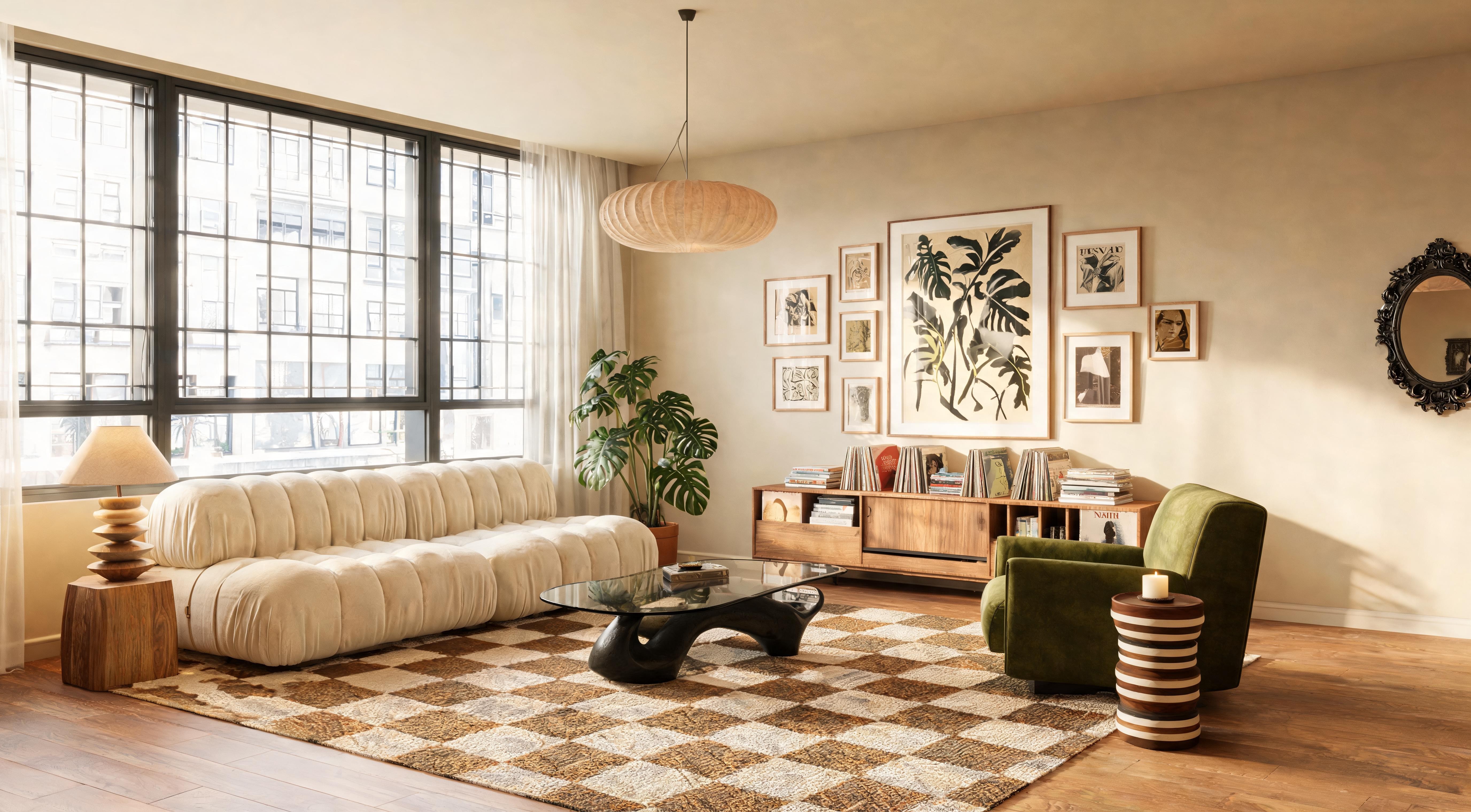
The single highest-impact change in any rental is a large rug laid over the existing floor. It does not matter what is underneath — bad laminate, worn carpet, cold tiles — a rug that covers most of the floor area transforms the room’s visual quality and its physical experience in the morning. The most important word is large. A rug that is too small for the room looks like a bath mat dropped in the middle of the space. It makes the room feel smaller, not larger, and draws attention to the floor around it rather than the room as a whole.
The minimum requirement: the front legs of every sofa and chair should sit on the rug. Ideally all four legs. The rug should be large enough that the floor is mostly covered and the walls feel contained by it rather than exposed around it.
Material matters more than most people realise. A cheap synthetic rug — polypropylene or polyester — looks flat and thin from day one and gets worse. Natural fibres — jute, wool, cotton — look better, feel better underfoot, and age with character rather than against it. A jute or wool rug at the right size costs between £80 and £200 and survives multiple flats. Layering two rugs — a flat-weave jute as the base, a smaller higher-pile wool or boucle rug on top — is one of the most visually interesting floor solutions at any budget.
Curtains: The Transformation Most Renters Skip
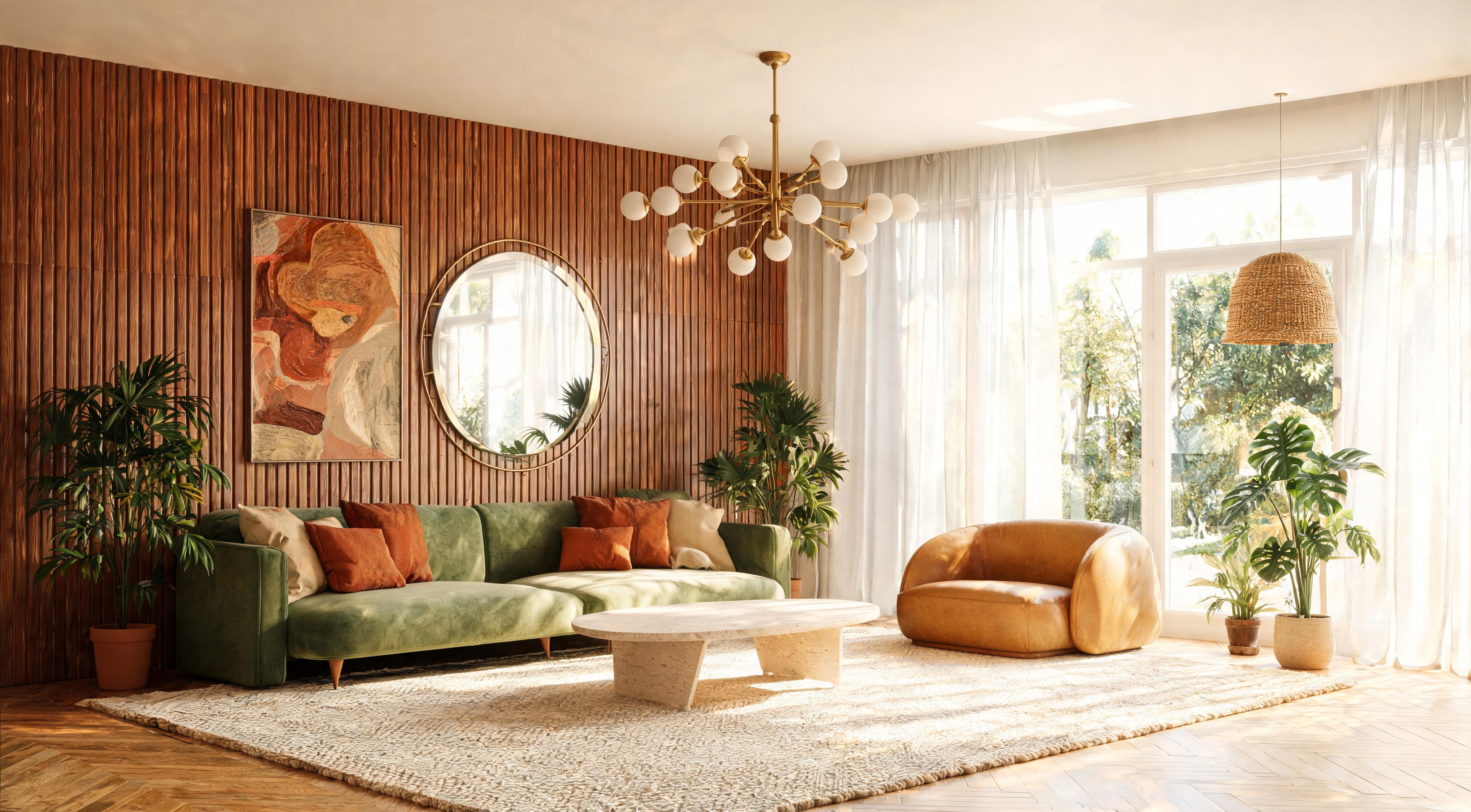
Most rented flats come with venetian blinds, or nothing. Both are a design problem. The fix is floor-to-ceiling curtains hung as high as possible — at ceiling height, or as close to it as the architecture allows. Curtains hung directly above the window make the ceiling feel low and the window feel small. The same curtain, hung from a rod fixed 15 to 20cm below the ceiling, makes the window feel larger and the room feel taller.
For renters who cannot drill, tension rods work for lightweight curtains in narrower windows — up to about 120cm. For wider spans and heavier curtains, a Command Strip curtain rod bracket holds up to 2.2kg and removes cleanly from most painted walls if taken down correctly. Ceiling-mounted curtain tracks using adhesive strips are increasingly widely available and handle the full weight of lined curtains without any wall fixings at all.
The most impactful curtain combination is a sheer linen panel for daytime — filtering light, creating softness, making the window do something during the day rather than just blocking a view — and a heavier curtain in a warm tone for evenings and for darkness. Neither needs to be expensive. Both need to reach the floor. A curtain that puddles slightly on the floor is always more generous-looking than one that stops short.
Lighting: Stop Using the Overhead Light
The most reliable way to identify a landlord-decorated rental is the lighting. One overhead fitting. One standard white bulb. Every evening the room looks exactly like what it is — a functional space with no atmosphere. The fix does not require any electrical work.
Plug-in pendant lights are the highest-impact solution. A pendant shade with a fabric cable that runs to a standard socket can be hung from a ceiling hook (adhesive, no mark) or draped over a picture rail in a period property. Hung above a sofa or a dining table, a plug-in pendant converts the overhead light from a harsh necessity to a designed element. They cost between £25 and £70 and take fifteen minutes to install.
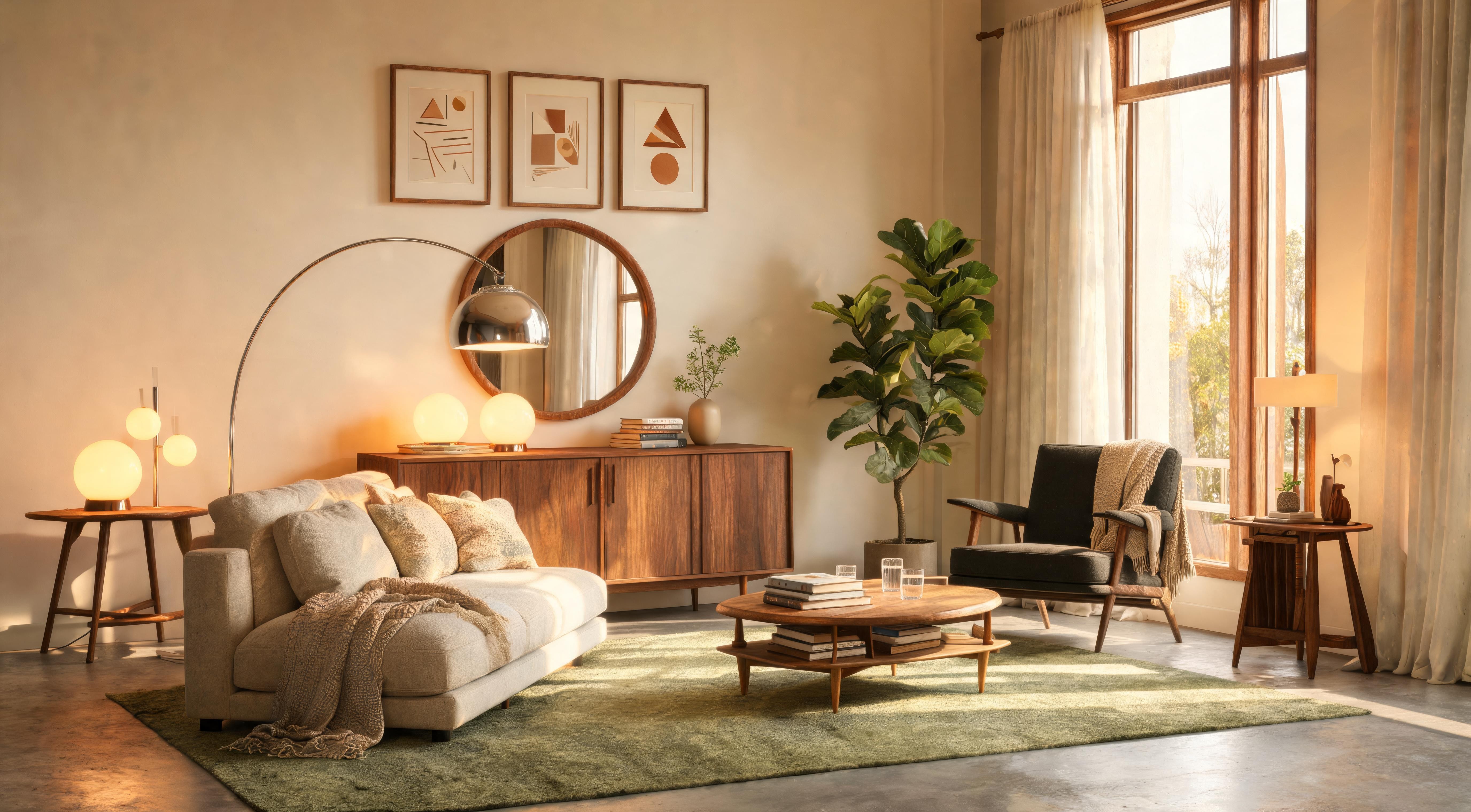
Floor lamps and table lamps do complementary work. A floor lamp in the corner of a room creates the third layer of light that makes a space feel designed rather than inhabited. A table lamp on a bedside table or shelf adds warmth at eye level. The ceiling light becomes a practical tool for getting dressed or finding things — not the primary experience of the room after 6pm.
All bulbs throughout should be 2700 Kelvin. The difference between a 4000K bulb (cool white, clinical, the kind most rental fittings come with) and a 2700K bulb (warm white, the temperature of candlelight and hotel rooms) in the same light fitting is significant enough that replacing the bulbs alone makes a noticeable difference before anything else changes.
Furniture Arrangement: The Free Change Nobody Makes
This costs nothing. Most renters never try it. The most common furnished-rental configuration is the sofa pushed against the longest wall, the TV opposite, and the coffee table between them — arranged by a landlord who wanted to fit the maximum number of items into the minimum floor area.
Moving the sofa away from the wall — even 30 to 50 centimetres — immediately makes the room feel larger and more intentional. The gap behind the sofa becomes an implied zone. A narrow console table or a row of plants behind the sofa completes the thought and gives the room a sense of depth it did not have before.
The second rearrangement to consider: the television does not need to be the object that everything else points toward. Position it where it works for viewing, but arrange the furniture to face a window, a fireplace, or a piece of art. A room that faces a focal point rather than a screen feels fundamentally different to inhabit. Take photographs of the original layout on your phone before moving anything — this makes the move-out reversal take minutes rather than hours.
Art Without Drilling a Single Hole
The assumption that renters cannot hang art is outdated. Command strips hold up to 7.2 kg per pair, remove cleanly from most painted walls if taken off correctly, and are available in sizes that accommodate almost any frame weight. The single instruction most people ignore: press the strip firmly against the wall for thirty seconds and wait twenty-four hours before hanging anything. Skipping the waiting time is what causes marks.
For a gallery wall, picture ledges are often a better solution than hung pieces. A floating ledge mounted on Command strips allows frames to lean rather than hang — which means the arrangement can be changed without new marks, and the ledge itself can hold plants and objects alongside art. A ledge running the length of a wall with layered frames at different heights is more visually interesting than individual hung prints and takes ten minutes to rearrange when you want a change.
For single large-format pieces — a print scaled to the width of a sofa or headboard — the most practical rental approach is an unframed print on heavyweight paper, clipped to a wooden dowel or hanging rod, suspended from a single hook. It weighs almost nothing, makes a single small hole, and can be moved easily. The lack of a frame reads as intentional rather than as a compromise.
The Kitchen: Three Changes, One Screwdriver
The kitchen is the hardest room to address without renovation and the one where small changes have the most visible impact. Three changes do most of the work.
The cabinet handles. Landlord kitchens almost universally have the cheapest hardware available — thin chrome bar pulls or integrated invisible edges. Replacing these with better hardware in brushed brass, matte black, or ceramic takes a screwdriver and fifteen minutes per handle. Keep the original handles in a labelled bag at the back of a cupboard so they go straight back on when you leave. The transformation is consistently disproportionate to the effort involved.
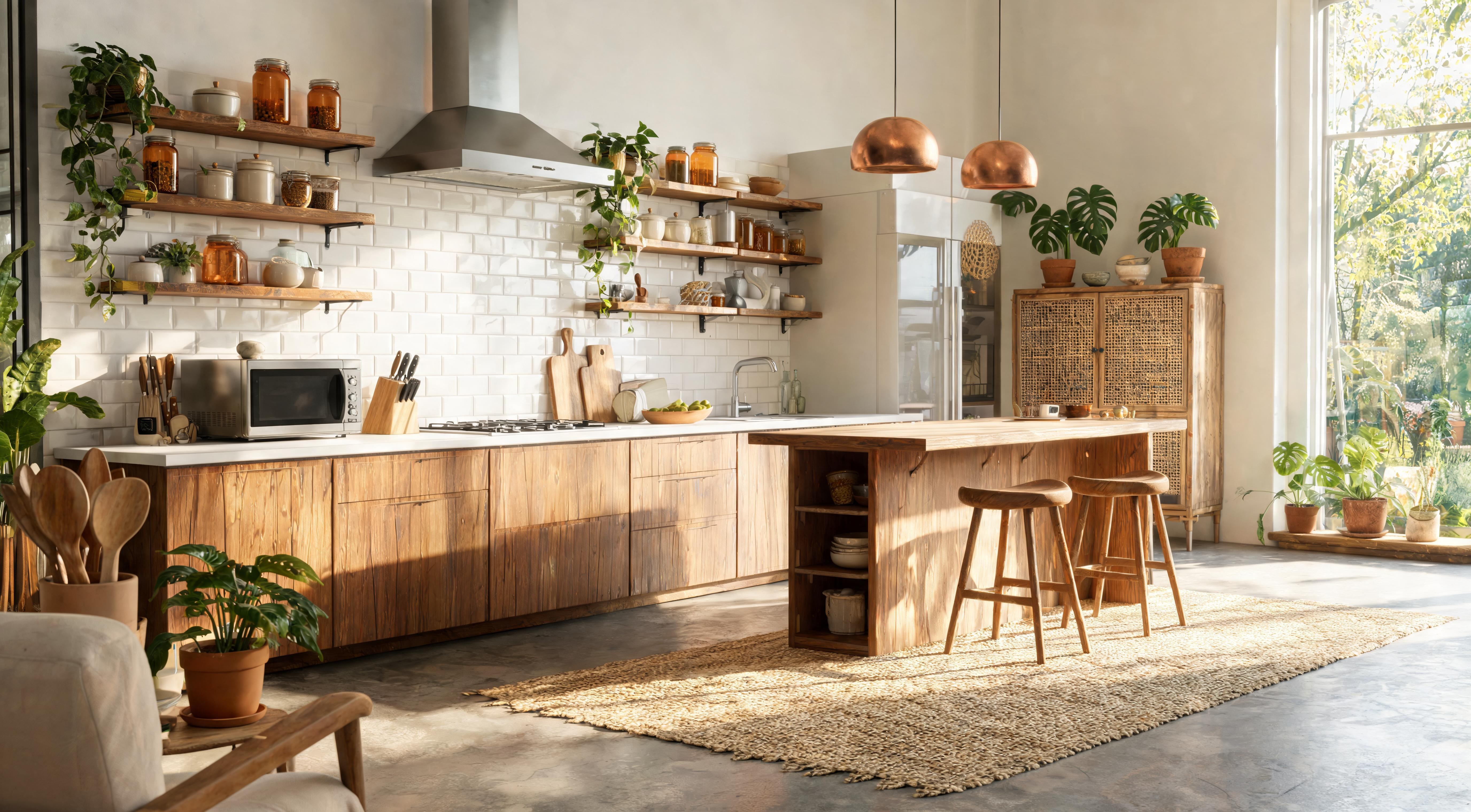
The open shelf. A freestanding shelving unit or a tension-rod shelf system requires no wall fixing. Styled as a coffee station — espresso machine, mugs on hooks, ground coffee in a ceramic jar, a small plant — it immediately makes the kitchen feel like a room someone chose to design rather than a room that was installed. The coffee station in particular creates a sense of ritual that changes how the kitchen is experienced daily.
Contact paper on the worktop. Landlord worktops are almost always either white laminate or a wood-effect finish, both of which are difficult to make look less cheap without replacing them. Peel-and-stick contact paper in marble, concrete, or slate finishes has improved significantly in recent years. At £15 to £30 per roll it covers a standard rental worktop, peels away cleanly with a hairdryer applied to the adhesive to soften it, and genuinely changes the visual character of the kitchen surface. The key is applying it slowly, smoothing out air bubbles as you go, and overlapping the edges so there are no visible seams.
The Bathroom: Remove First, Then Add
The landlord bathroom has four problems: the wrong mirror, the wrong accessories, the wrong shower curtain, and a floor that is almost certainly cold and bare. All are reversible within a day.
Start by removing everything the landlord installed: the small rectangular mirror, the chrome toilet roll holder, the towel ring, the soap dish. Store everything in a box, clearly labelled. The removal of landlord chrome accessories alone makes most rental bathrooms look significantly better immediately — what remains is a clean tiled surface rather than a catalogue of cheap fittings.
Then add: a round mirror leaned against the wall or fixed with a Command strip. A wood bath mat. Fresh towels in a single colour — warm white, oatmeal, or a solid earthy tone. A small tray holding a soap dispenser and a diffuser. If your bathroom has a shower curtain, replace the landlord’s with a cream linen-look or sage waffle-weave version — available for £15 to £35 — and keep the original in its packaging.
The principle is the same in every room: removal is often the most powerful first step before any addition. Landlord-selected accessories create visual noise that makes the room feel busy without feeling designed. Removing them and replacing with a single considered edit — fewer objects, better chosen — consistently produces a better result than adding more on top of what is already there.
Plants as Architecture
In a rental you cannot add architectural interest by building or changing the structure. Large plants replace what architecture would otherwise provide — scale, organic form, and the sense that a corner or a wall has been considered rather than left empty.
A fiddle leaf fig, a bird of paradise, or a large monstera in a room adds something that no furniture or art can replicate at the same price point: vertical scale and living texture. Position large plants in corners, slightly back from the window so they receive good indirect light without being in direct sun for extended periods. Group three plants at different heights in a single corner rather than distributing them individually around the room — a grouped arrangement reads as intentional and creates a visual feature; individual plants dotted around read as afterthoughts.
The plant pot matters as much as the plant. A terracotta, ceramic, or rattan pot at a scale proportionate to the plant — not the tiny nursery pot the plant came in — is the difference between a plant that looks placed and a plant that looks bought and forgotten.
Scent: The Most Underrated Tool
The bedroom is the room you experience first thing in the morning and last thing at night. The hallway is the room you enter every time you come home. Both are changed more by scent than by almost any visual change, and neither requires drilling, painting, or landlord permission.
A diffuser in the bedroom — run in the morning while getting ready and in the evening while unwinding — establishes a sensory association with the space that makes it feel genuinely personal. Linen spray on the bedding each morning after making the bed is the single smallest ritual with the most disproportionate effect on how a room feels. A scented candle used in the living room in the evenings does similar work. None of these cost more than £20 to £30 and none require any change to the physical space.
The Move-Out Checklist
Everything described in this guide is reversible. The deposit risk comes from doing the reversal in the wrong order, or from using products that are not genuinely removable.
The only deposit risks come from changes outside this guide — actual drilling, painting without permission, or permanent adhesives sold as removable but not genuinely so. Read product reviews specifically for the removal experience before buying anything adhesive. The test is whether other renters report clean removal, not whether the packaging claims it.
A rented flat that feels like yours is not a contradiction. It is the result of approaching a constrained brief the way a designer would — identifying what can be changed, doing those things well, and not wasting energy on what cannot. The landlord chose the walls and the floor. The rug, the curtains, the light, the handles, the plants, the scent — those are yours. That is enough to make a room feel entirely different to be in every day.