

The Reading Nook: How to Create One in Almost Any Home
Window seats, alcove nooks, corner chair setups and under-stair spaces — how to find the right spot, what elements make it work, and how to make it feel like a destination.
The reading nook is one of the most coveted small interventions in a home — a designed place to sit with a book that feels separate from the rest of the room, slightly enclosed, slightly private, with good light and nowhere obvious to be anywhere else. Most people assume they do not have the space for one. Most people are wrong. A reading nook does not require a bay window, a spare alcove, or a house with architectural character. It requires a corner, a chair, a lamp placed correctly, and the willingness to treat a small area of a room as a destination rather than leftover space.
Finding the Space
Reading nooks come from four types of space, in descending order of how architectural the result feels.
The most underused space in British homes is the chimney breast alcove — the recessed area either side of a fireplace in a period property. Almost every Victorian and Edwardian terraced house in the UK has at least two of these, and most of them contain either a bookshelf pushed against the back wall or nothing at all. A built-in bench seat at 45cm height with a 50cm-deep cushion, shelves above to ceiling height, and a wall-mounted lamp beside it converts this space into the most architecturally satisfying reading nook available in a domestic setting.
The Window Seat
A window seat works because it combines three things that make reading comfortable: natural light, a sense of enclosure from the window surround, and a horizontal surface you can pull your knees up on. The bay window version — where three or five sides of glazing create a projecting space — is the most dramatic, but any window with enough sill depth (a dormer in a loft conversion, a deep stone sill in an older property) can be converted into a seat.
The minimum useful depth from wall face to glass is 50cm. Below this the seat is too narrow to sit comfortably without your back against the glass — which is cold in winter and creates glare. 60 to 70cm of depth is the comfortable range. Beyond 70cm the seat starts to become a platform rather than a seat — which can work if you treat it as a daybed rather than a chair.
Cushion depth should match the seat depth minus 5cm — a 60cm seat takes a 55cm cushion. The cushion thickness should be at least 8cm for comfort during a reading session of any length. Use a foam density of 35kg/m³ or above for a cushion that holds its shape over time; cheaper foam compresses to flat within months.
Storage underneath the window seat — drawers or a hinged lid opening into the cavity — is almost always worth doing when building from scratch. The cavity under a window seat is one of the most practical storage spaces in a living room or bedroom, and the lid or drawer fronts are invisible from any distance.
The Alcove Nook
The alcove reading nook requires more planning than a corner chair but less than a full window seat build, and it delivers something neither can: a sense of being inside the room and slightly apart from it simultaneously. The alcove walls on three sides create enclosure without the room feeling smaller.
The standard alcove in a British Victorian terraced house is 90 to 120cm wide and 35 to 50cm deep — which is exactly the right width for a reading seat and tight enough to feel sheltering rather than just a recess. A built-in bench at 45cm height running the full width of the alcove, with bookshelves above from the bench to the ceiling, and a single wall-mounted lamp at reading height on one side, is a complete reading nook requiring no more floor space than the alcove itself.
The back wall of the alcove is the opportunity most people miss. Paint it a colour two or three tones darker than the room — the same colour family, deeper. This creates a visual depth that makes the alcove feel considered rather than discovered, and it frames the nook as a distinct zone within the room without any partition or architectural intervention.
The Corner Chair: The No-Build Nook
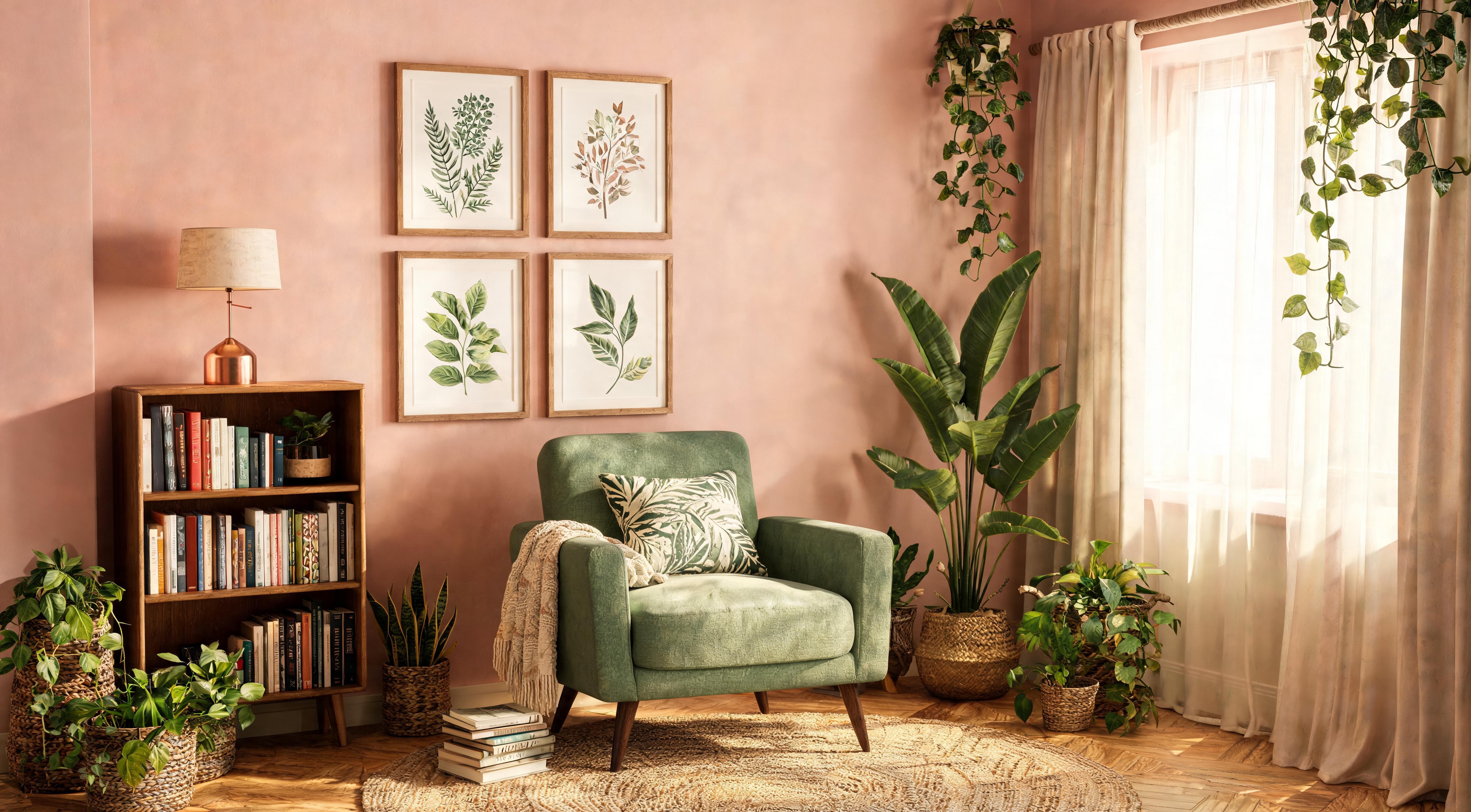
The corner chair reading nook is the most accessible version and the most frequently done wrong. Two mistakes account for almost every failed corner nook: a chair that is too small for the corner, so it looks stranded rather than contained; and a lamp that is too far away or at the wrong height, so the light falls across the reading surface at an angle rather than onto it.
The chair should fill the corner without touching both walls. An armchair that is 80 to 90cm wide in a corner that is 120cm wide on both sides gives 15 to 20cm of clearance from each wall — enough to feel contained by the corner without feeling pressed into it. A round or curved armchair reads as more deliberate in a corner than a square one. Add a small round side table on one side at the same height as the arm of the chair.
The lamp matters more than the chair. A floor lamp behind and beside the chair — positioned over the shoulder of the reading arm, with the shade at approximately head height when seated — creates the right quality of task light without casting shadow across the page. A lamp that stands beside the chair at the same height as the arm creates upward light that is flattering but insufficient for sustained reading.
A small rug under the front legs of the chair — not under all four legs, just the front — defines the zone. A blanket draped over the arm of the chair completes the thought.
Lighting: The Element That Makes or Breaks It
Every reading nook type depends on the same principle: the light source must be above and to one side of the reading surface, close enough to deliver adequate brightness without the light fitting itself entering the visual field. This is why overhead lighting does not work for reading — it creates shadow on the page from the reader’s own body and causes eye strain during extended reading.
Use a 2700 Kelvin bulb in every reading lamp without exception. Cooler light — the 4000K bulbs that come fitted in most lamps — creates a clinical quality that works against the restful purpose of a reading space. Warmer light (2700K, equivalent to old incandescent) creates the amber quality that makes a corner feel like somewhere to stay. A dimmer is worth adding if the nook will also be used in the evening — reading light intensity requirements are significantly lower than working light, and the ability to bring the lamp down to 40 or 50% is part of what makes a nook feel different to a desk.
Building It Up: The Seven Layers
Colour: Make the Nook Different to the Room
A reading nook benefits from being visually slightly separate from the rest of the room — and colour is the simplest way to achieve this without building a partition. Paint the back wall of an alcove, or the wall behind a corner chair, two to three tones deeper than the room’s primary colour. The same colour family — just darker. Forest green room with a near-black green back wall. Warm cream room with a deep terracotta or cocoa alcove back wall. This creates a visual pocket that makes the nook feel like its own space within the room.
The technique is sometimes called colour drenching a zone: taking the alcove walls, ceiling and potentially the shelf backs all in the same deeper tone. It costs one tin of paint and makes the architectural difference between a chair in a corner and a reading room.
Textiles inside the nook can afford to be richer and more textural than the rest of the room. Velvet cushions in a room with linen elsewhere. A chunky wool throw in a room where every other textile is smooth. The nook is the place to use the fabric you felt was too much for the main room — in the compressed scale of a reading corner, a bold texture reads as intentional rather than overwhelming.
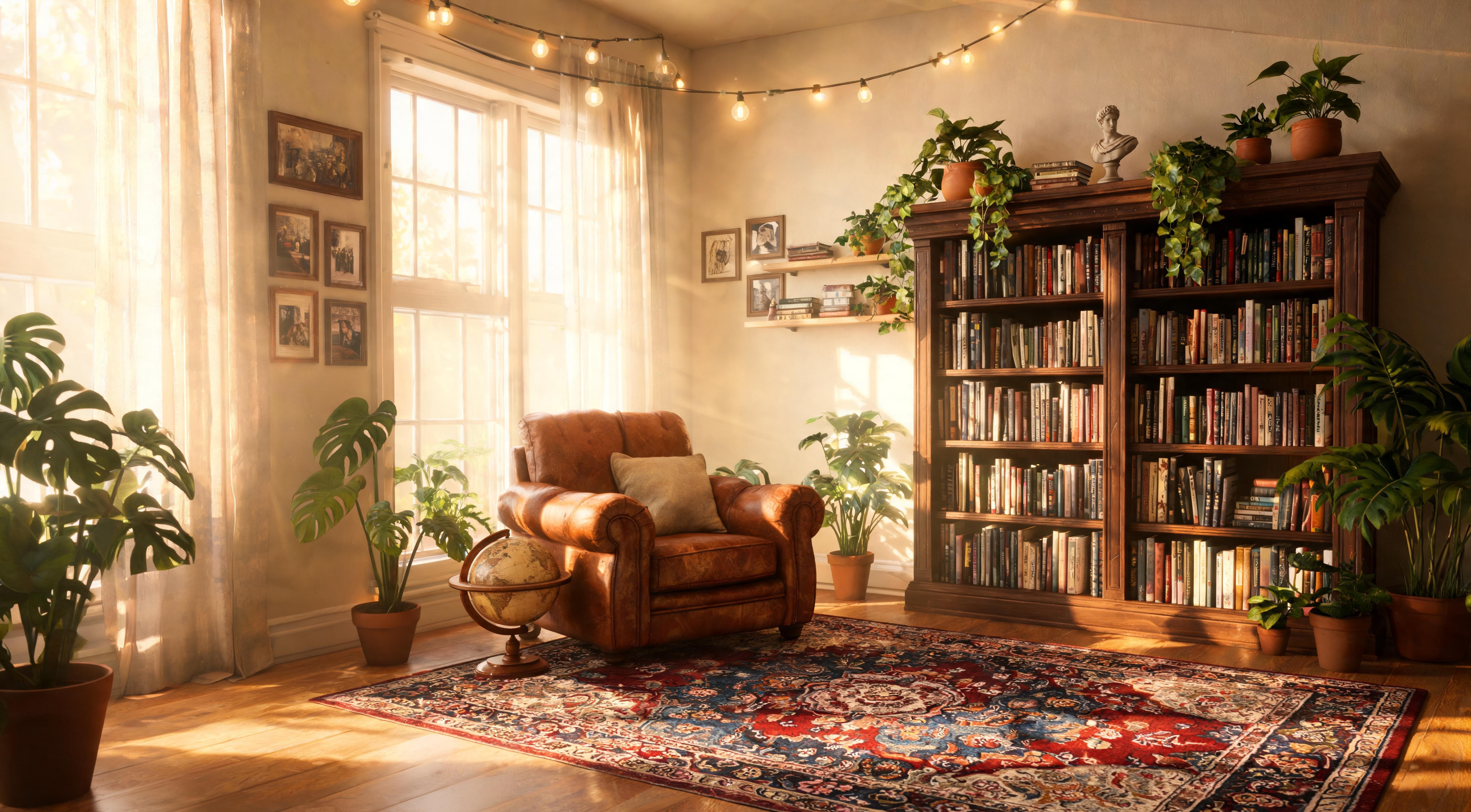
The reading nook is not a luxury reserved for homes with bay windows and chimney breast alcoves. It is the result of choosing one corner of one room and treating it as a place rather than a leftover. The chair does not need to be expensive. The lamp matters more than the chair. The books make it make sense. And the back wall, painted one shade darker than the room around it, does more than any piece of furniture to make a corner feel like somewhere worth going to.