

Open Shelving vs Cabinets: What Nobody Tells You Before You Rip Out a Kitchen Wall
The real trade-offs between open shelving and closed cabinets — upkeep, styling commitment, resale perception, and the hybrid layout most kitchen designers actually recommend.
Open shelving is one of the most photographed kitchen decisions on Pinterest and one of the most misunderstood in practice. In a styled photograph, three shelves of matching ceramics and a few trailing plants look effortless. In an actual working kitchen, those same shelves need to be re-tidied almost daily, catch grease and dust at a rate closed cabinets never do, and expose every mismatched mug and cereal box you own to anyone standing in the room.
None of that means open shelving is a bad idea. It means it’s a bigger commitment than the photographs suggest, and the households that love it long-term are usually the ones who went in knowing exactly what they were signing up for.
What you’re actually trading
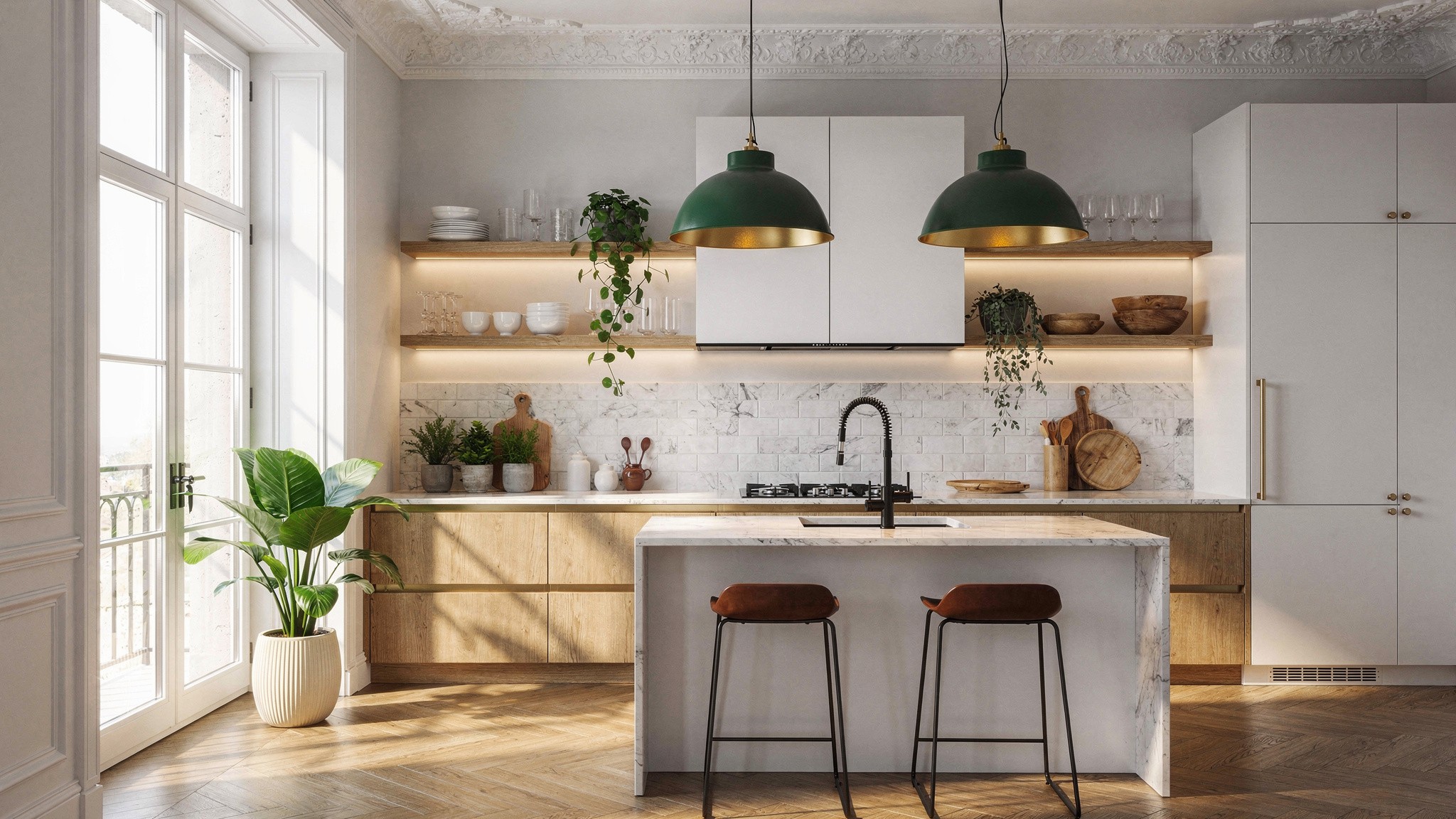
Closed cabinets hide inconsistency. Your everyday plates don’t need to match your serving bowls, your spice jars don’t need coordinated labels, and a cabinet door closes on all of it in half a second. Open shelving removes that forgiveness entirely — everything on display becomes part of the kitchen’s visual design, which means either committing to a curated, fairly minimal collection of items, or accepting that the shelves will look cluttered.
The upkeep difference is real and constant, not occasional. Grease from cooking travels further than most people expect, and open shelves near a hob accumulate a fine film within weeks that closed cabinet interiors never see. Dust settles on every exposed surface, including the tops of stacked plates, in a way that simply doesn’t happen behind a door. Neither problem is dramatic on its own, but together they mean open shelving needs a wipe-down every week or two to stay looking like the photograph that sold you on it.
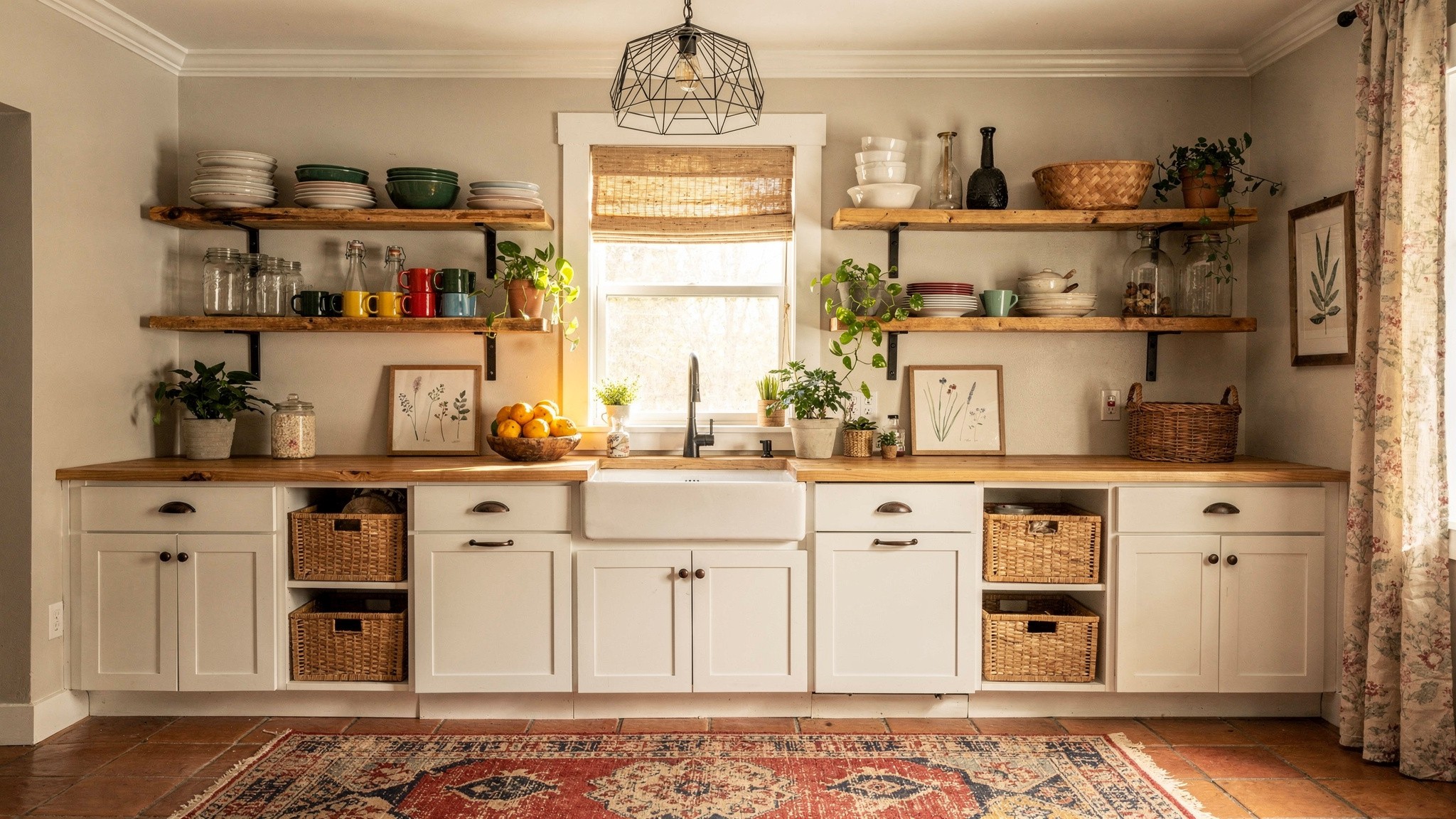
The hybrid most designers land on
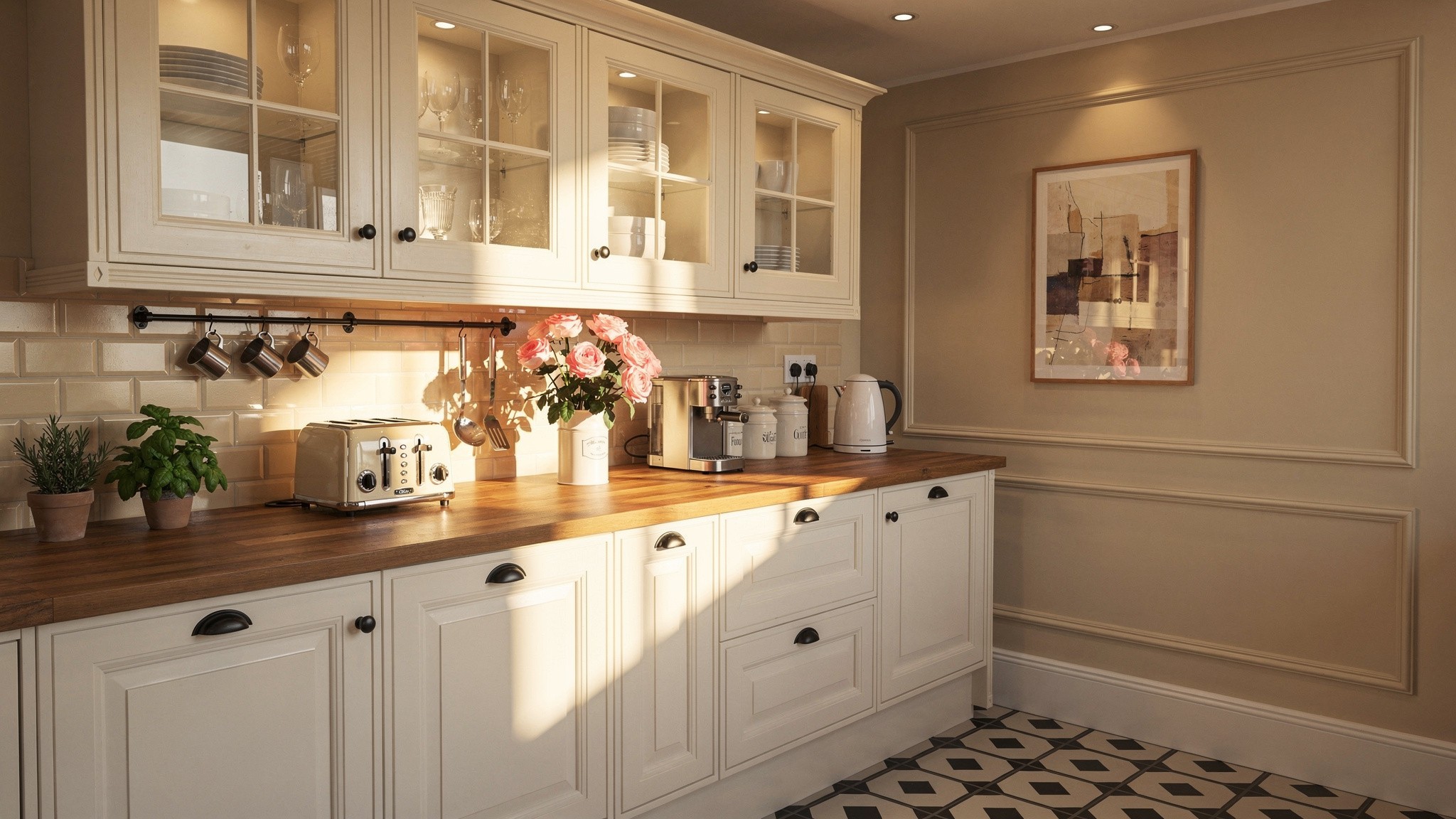
Very few working kitchens are fully open or fully closed once the design settles, because the honest answer is that different zones want different things. Lower cabinets, which hold pots, pans, bin storage and anything you don’t want on permanent display, work best fully closed — that’s also where grease exposure is highest, right around the hob and worktop level. Upper storage, further from the cooking heat and at eye level where display actually gets appreciated, is where open shelving does its best work.
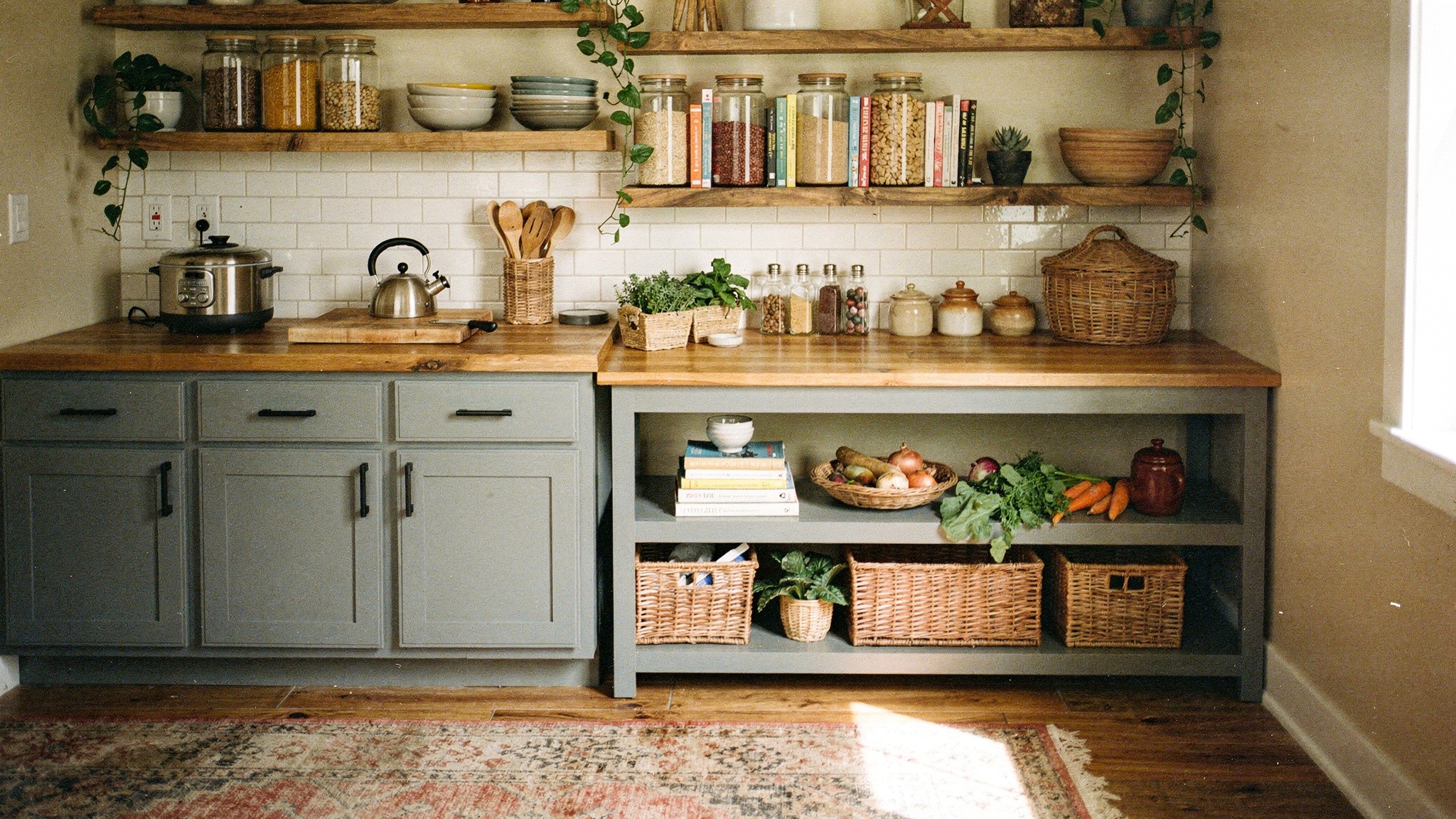
A common, tested layout keeps a short run of open shelving — often two to four shelves — on one wall or beside a window, reserved for glassware, a curated stack of everyday plates, and one or two decorative pieces, while the rest of the upper storage stays as closed wall cabinets. This gives the kitchen the visual lift open shelving provides without exposing the bulk of your actual kitchen inventory to daily upkeep and dust.
What it does to resale
Estate agents are fairly consistent on this point: fully open kitchen shelving is a neutral-to-negative for a broad pool of buyers, not because it looks bad, but because it reads as maintenance and reduces perceived storage — two things buyers weigh heavily on a kitchen walkthrough. A hybrid layout, or open shelving that’s clearly a secondary feature alongside plenty of closed storage, doesn’t carry the same hesitation. If resale is anywhere on your horizon within the next several years, it’s worth designing the hybrid version even if a fully open kitchen is the look you’d personally choose to live with.
Open shelving isn’t a style mistake — it’s a maintenance and editing commitment that photographs better than it lives, most of the time. Reserve it for the zone furthest from grease and closest to eye level, keep the closed cabinets doing the heavy lifting for actual kitchen volume, and you get the visual openness without signing up to re-style your plates every Sunday.